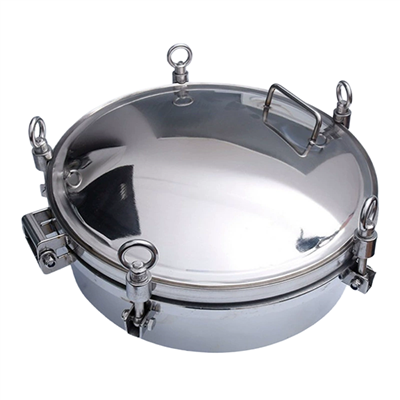

When it comes to industrial equipment and infrastructure, stainless manways play a crucial role. As a stainless manway supplier, I've had the privilege of working closely with various industries to understand their needs and provide the best solutions. One of the most frequently asked questions I encounter is about the load - bearing capacities of a stainless manway. In this blog, I'll delve into this topic in detail, exploring the factors that influence load - bearing capacity and how it impacts different applications.
Understanding Stainless Manways
Stainless manways are access points installed in tanks, vessels, and other industrial structures. They provide a means for personnel to enter and exit the equipment for inspection, maintenance, and cleaning purposes. Made from high - quality stainless steel, these manways offer excellent corrosion resistance, durability, and strength.
Factors Affecting Load - Bearing Capacity
- Material Thickness
The thickness of the stainless steel used in the manway construction is a primary factor influencing its load - bearing capacity. Thicker materials can withstand greater forces without deformation. For example, a manway with a thicker wall will be able to support heavier loads compared to one with a thinner wall. In industrial applications where large amounts of pressure or weight are exerted on the manway, a thicker - walled manway is often required. - Design and Shape
The design and shape of the manway also play a significant role. Manways come in various shapes, such as circular, oval, and rectangular. Circular manways generally have better load - distribution characteristics because the stress is evenly distributed around the circumference. The design of the flanges, hinges, and locking mechanisms can also affect the overall load - bearing capacity. Well - designed components ensure that the manway can handle the applied loads without failure. - Welding Quality
Welding is an essential part of manway manufacturing. High - quality welding ensures that the different parts of the manway are securely joined together. A poor - quality weld can create weak points in the structure, reducing its load - bearing capacity. When the manway is subjected to heavy loads, these weak points may fail, leading to potential safety hazards. Therefore, it is crucial to use experienced welders and follow strict welding standards during the manufacturing process. - Installation Conditions
The way the manway is installed can have a significant impact on its load - bearing capacity. If the manway is not properly aligned or secured during installation, it may not be able to support the intended loads. For instance, if the bolts are not tightened to the correct torque, the manway may shift under load, causing stress concentrations and potentially leading to failure.
Load - Bearing Capacity in Different Applications
- Chemical Industry
In the chemical industry, manways are often installed on storage tanks that hold various chemicals. These tanks may be subject to internal pressure due to the chemical reactions taking place inside. The load - bearing capacity of the manway must be sufficient to withstand the pressure exerted by the chemicals. For example, in a high - pressure chemical storage tank, a manway with a high load - bearing capacity is required to prevent leaks and ensure the safety of the personnel and the environment. - Food and Beverage Industry
In the food and beverage industry, manways are used for access to processing equipment and storage containers. The load - bearing capacity requirements in this industry are different from those in the chemical industry. While the internal pressure may not be as high, the manway still needs to support the weight of the personnel and any equipment used during cleaning and maintenance. Additionally, the manway must meet strict hygiene standards, which means that the materials used and the design should be easy to clean and sanitize. - Oil and Gas Industry
The oil and gas industry has some of the most demanding requirements for manway load - bearing capacity. Manways in oil and gas storage tanks and pipelines are exposed to high pressures and harsh environmental conditions. They need to be able to withstand extreme temperatures, corrosive substances, and high - impact loads. For example, in offshore oil platforms, manways must be designed to handle the dynamic loads caused by waves and wind, as well as the internal pressure of the oil and gas.
Importance of Choosing the Right Load - Bearing Capacity
Selecting the appropriate load - bearing capacity for a stainless manway is crucial for several reasons. Firstly, it ensures the safety of the personnel working with the equipment. A manway with an insufficient load - bearing capacity may fail under stress, leading to accidents and injuries. Secondly, it helps to prevent leaks and spills, which can have a significant impact on the environment and the reputation of the company. Finally, choosing the right load - bearing capacity can also lead to cost savings in the long run. A manway that is over - designed may be more expensive to purchase and install, while an under - designed manway may require frequent repairs or replacements.
Our Product Offerings
As a stainless manway supplier, we offer a wide range of manways with different load - bearing capacities to meet the diverse needs of our customers. Our Atmospheric Manhole is designed for applications where the internal pressure is relatively low. It provides easy access for inspection and maintenance while ensuring a tight seal. Our Manhole Stainless is made from high - quality stainless steel, offering excellent corrosion resistance and high load - bearing capacity. For more heavy - duty applications, we have the Steel Manway, which is designed to withstand high pressures and heavy loads.
How to Determine the Right Load - Bearing Capacity
Determining the right load - bearing capacity for your application requires a careful assessment of several factors. First, you need to consider the internal pressure of the equipment. This can be determined by analyzing the process conditions and the type of substances stored or processed in the equipment. Second, you need to consider the external loads, such as the weight of the personnel, equipment, and any environmental factors. Third, you should consult with a professional engineer or a manway supplier who can provide expert advice based on your specific requirements.


Conclusion
The load - bearing capacity of a stainless manway is a critical factor that needs to be carefully considered in any industrial application. By understanding the factors that influence load - bearing capacity and choosing the right manway for your needs, you can ensure the safety, reliability, and efficiency of your equipment. As a stainless manway supplier, we are committed to providing high - quality products and expert advice to help you make the right choice. If you have any questions or need assistance in selecting the right manway for your application, please feel free to contact us for a procurement discussion.
References
- ASME Boiler and Pressure Vessel Code
- ASTM Standards for Stainless Steel
- Industrial Equipment Handbook on Manways and Access Ports