


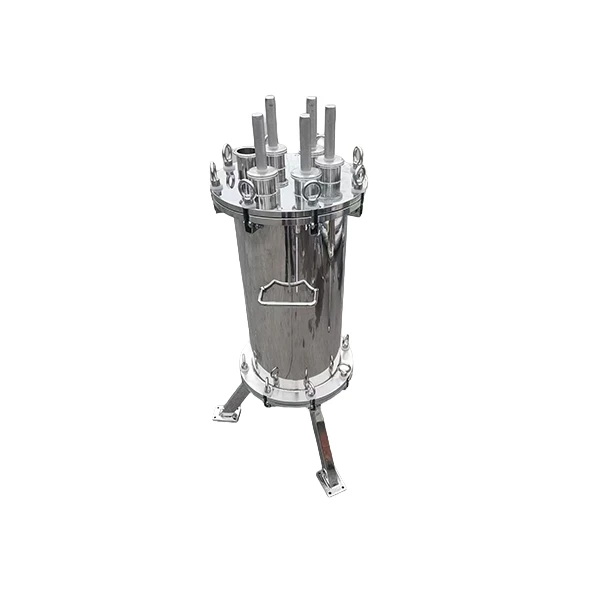
Hey there! As a supplier of Multi - Cartridge Filters, I've seen firsthand how temperature can have a significant impact on the performance of these filters. In this blog, I'll break down the effects of temperature on Multi - Cartridge Filters, so you can understand how to optimize their use in different conditions.

How Temperature Affects Filter Material
First off, let's talk about the filter material. Most Multi - Cartridge Filters use materials like polypropylene, cellulose, or glass fiber. These materials have different temperature tolerances.
When the temperature rises, the physical properties of the filter material can change. For example, polypropylene, a common filter material, starts to soften at relatively high temperatures. If the temperature gets too high, the polypropylene cartridges can lose their shape. This is a big deal because the shape of the cartridge is crucial for proper filtration. When the shape is compromised, the flow path of the fluid through the filter can be disrupted, leading to uneven filtration and potentially allowing more contaminants to pass through.
On the other hand, at low temperatures, the filter material can become brittle. Cellulose filters, for instance, can crack when exposed to extremely cold temperatures. These cracks create gaps in the filter media, which means that the filter won't be able to trap particles as effectively as it should.
Impact on Filtration Efficiency
Temperature also has a direct impact on filtration efficiency. At higher temperatures, the viscosity of the fluid being filtered decreases. Think about honey – when it's warm, it flows much more easily than when it's cold. The same principle applies to the fluids passing through the Multi - Cartridge Filter.
When the fluid has a lower viscosity, it can pass through the filter more quickly. While this might seem like a good thing, it can actually reduce the filtration efficiency. The faster the fluid moves through the filter, the less time the contaminants have to be trapped by the filter media. As a result, some particles may slip through the filter, leading to a lower quality of the filtered fluid.
Conversely, at lower temperatures, the fluid's viscosity increases. This means that the fluid moves more slowly through the filter. While this can increase the contact time between the fluid and the filter media, it also puts more strain on the filter. The increased resistance can cause the pressure drop across the filter to rise. If the pressure drop gets too high, it can lead to premature filter failure or even damage to the filter housing.
Flow Rate and Temperature
Flow rate is another important factor affected by temperature. As mentioned earlier, temperature affects the viscosity of the fluid. When the temperature is high and the viscosity is low, the flow rate through the Multi - Cartridge Filter tends to increase. This can be beneficial in some cases, as it allows for a higher volume of fluid to be filtered in a shorter period.
However, if the flow rate is too high, it can cause problems. The high flow rate can create turbulence within the filter, which can dislodge particles that have already been trapped in the filter media. This can lead to a decrease in filtration efficiency and an increase in the amount of contaminants in the filtered fluid.
At low temperatures, the reduced flow rate can be a challenge. If the flow rate is too low, it may not be sufficient to meet the requirements of the system. This can slow down the overall process and potentially cause production delays.
Pressure Drop and Temperature
Pressure drop is a key indicator of the performance of a Multi - Cartridge Filter. As the temperature changes, so does the pressure drop across the filter.
At high temperatures, the lower viscosity of the fluid results in a lower pressure drop. This is because the fluid can flow more easily through the filter. However, as the filter becomes clogged with contaminants over time, the pressure drop will still increase. But compared to low - temperature conditions, the rate of increase in pressure drop may be slower at high temperatures.
In low - temperature conditions, the increased viscosity of the fluid causes a higher pressure drop. The filter has to work harder to push the thick fluid through the filter media. If the pressure drop exceeds the recommended limit, it can cause the filter to fail. This is why it's important to monitor the pressure drop across the filter, especially in low - temperature environments.
Other Filters in the Market
In addition to Multi - Cartridge Filters, there are other types of filters available in the market. For example, the Duplex Basket Filter is a popular choice for applications where continuous filtration is required. It has two baskets that can be used alternately, allowing for easy cleaning and maintenance without interrupting the filtration process.
The Magnetic Rod Filter is designed to remove ferrous particles from the fluid. It uses powerful magnets to attract and hold the iron - based contaminants, providing an effective way to protect downstream equipment from damage.
The Single - core Microporous Membrane Filter is ideal for applications that require high - precision filtration. It can remove very small particles from the fluid, ensuring a high - quality filtered product.
Conclusion and Call to Action
Understanding the effect of temperature on the performance of a Multi - Cartridge Filter is crucial for ensuring optimal filtration and prolonging the life of the filter. Whether you're dealing with high - temperature or low - temperature applications, it's important to choose the right filter material and monitor the filter's performance regularly.
If you're in the market for a Multi - Cartridge Filter or any of the other filters I mentioned, don't hesitate to reach out. We're here to help you find the best filtration solution for your specific needs. Contact us to start a procurement discussion and let's work together to improve your filtration process.
References
- "Filtration Handbook" by Peter A. Williams
- "Industrial Filtration Technology" by David W. Green and Robert H. Perry


