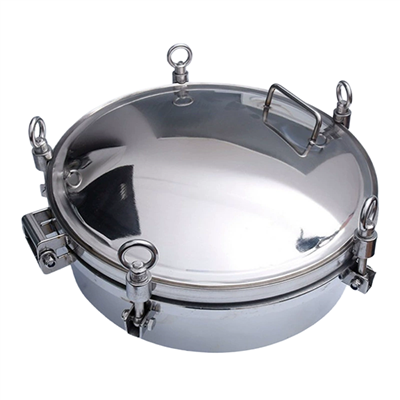

In the pharmaceutical industry, the demand for high - quality filtration products is extremely high. As a trusted supplier of Angle - type Strainers, I understand the critical role these strainers play in ensuring the purity and quality of pharmaceutical products. In this blog, I will delve into the quality standards for Angle - type Strainers in the pharmaceutical industry.
1. Material Quality
The materials used in Angle - type Strainers are of utmost importance. In the pharmaceutical industry, the strainers are often in contact with various pharmaceutical substances, including active pharmaceutical ingredients (APIs), solvents, and excipients. Therefore, the materials must be chemically inert to prevent any chemical reactions that could contaminate the pharmaceutical products.
Stainless steel is a commonly used material for Angle - type Strainers in the pharmaceutical industry. It offers excellent corrosion resistance, mechanical strength, and is easy to clean and sterilize. High - grade stainless steel, such as 316L, is often preferred due to its low carbon content, which further enhances its corrosion resistance in harsh chemical environments.
The surface finish of the strainer is also crucial. A smooth surface finish not only reduces the risk of particle adhesion but also makes it easier to clean and sanitize. The surface roughness should be within a specific range, typically measured in micrometers. A lower surface roughness value indicates a smoother surface, which is more suitable for pharmaceutical applications.
2. Filtration Efficiency
Filtration efficiency is a key quality standard for Angle - type Strainers in the pharmaceutical industry. The strainer must be able to effectively remove particles of a specific size from the pharmaceutical fluid. The filtration efficiency is usually expressed as a percentage, indicating the proportion of particles of a given size that are removed by the strainer.
The pore size of the strainer is a critical factor in determining its filtration efficiency. In the pharmaceutical industry, different processes may require different pore sizes. For example, in the production of parenteral drugs, a very fine pore size may be required to remove even the smallest particles, such as bacteria and endotoxins. The pore size should be accurately specified and verified through rigorous testing.
To ensure consistent filtration efficiency, the manufacturing process of the Angle - type Strainer must be carefully controlled. The distribution of pore sizes should be uniform across the entire surface of the strainer. Any variations in pore size could lead to inconsistent filtration performance and potentially compromise the quality of the pharmaceutical products.
3. Hygiene and Cleanability
Hygiene is of paramount importance in the pharmaceutical industry. Angle - type Strainers must be designed and manufactured to meet strict hygiene standards. The strainer should be easy to clean and sterilize to prevent the growth of microorganisms and the accumulation of contaminants.
The design of the strainer should minimize dead spaces where fluid can stagnate and where contaminants can accumulate. A smooth and seamless design is preferred, as it reduces the risk of microbial growth and makes cleaning more effective. Additionally, the strainer should be able to withstand various cleaning and sterilization methods, such as steam sterilization, chemical cleaning, and autoclaving.
Regular cleaning and maintenance of the Angle - type Strainer are essential to ensure its long - term performance and compliance with hygiene standards. The cleaning process should be well - documented, and the cleaning agents used should be compatible with the materials of the strainer and the pharmaceutical products.
4. Pressure and Flow Characteristics
The Angle - type Strainer must be able to withstand the pressure and flow conditions of the pharmaceutical process. The pressure rating of the strainer should be sufficient to handle the maximum pressure that may be encountered during operation. If the pressure rating is too low, the strainer may fail, leading to product contamination or process disruption.
The flow characteristics of the strainer are also important. The strainer should have a low pressure drop to ensure efficient fluid flow. A high pressure drop can increase the energy consumption of the process and may also affect the performance of other equipment in the system. The flow rate through the strainer should be carefully calculated and optimized to meet the requirements of the pharmaceutical process.
5. Compatibility with Pharmaceutical Processes
The Angle - type Strainer must be compatible with the specific pharmaceutical processes in which it is used. This includes compatibility with the pharmaceutical substances, the process temperature, and the pH of the fluid. For example, some pharmaceutical substances may be sensitive to certain materials or may require specific temperature conditions for processing.
The strainer should be able to operate effectively within the temperature range of the pharmaceutical process. Extreme temperatures can affect the mechanical properties of the strainer and its filtration performance. Similarly, the pH of the fluid can also have an impact on the corrosion resistance of the strainer materials.
6. Compliance with Regulatory Standards
The pharmaceutical industry is highly regulated, and Angle - type Strainers must comply with various regulatory standards. These standards include Good Manufacturing Practice (GMP) requirements, which ensure the quality and safety of pharmaceutical products. The strainer should be designed, manufactured, and tested in accordance with GMP guidelines.
In addition to GMP, there may be other regulatory requirements depending on the country or region. For example, in the United States, the Food and Drug Administration (FDA) has specific regulations for pharmaceutical filtration products. The strainer must meet these regulations to be used in pharmaceutical manufacturing.
Comparison with Other Filtration Products
While Angle - type Strainers have their unique advantages, it's also worth comparing them with other filtration products such as Multi - Cartridge Filter, Simplex Filter, and Magnetic Strainer Filter.
Multi - Cartridge Filters offer high - capacity filtration and are suitable for large - scale pharmaceutical production. They can handle a large volume of fluid and provide efficient filtration. However, they may be more complex and expensive compared to Angle - type Strainers.
Simplex Filters are simple in design and are often used for basic filtration applications. They are cost - effective but may have limitations in terms of filtration efficiency and capacity compared to Angle - type Strainers.
Magnetic Strainer Filters are designed to remove magnetic particles from the fluid. They are useful in applications where magnetic contaminants are a concern. However, they may not be as effective in removing non - magnetic particles as Angle - type Strainers.


Conclusion
In conclusion, the quality standards for Angle - type Strainers in the pharmaceutical industry are strict and comprehensive. From material quality and filtration efficiency to hygiene, pressure and flow characteristics, compatibility with pharmaceutical processes, and compliance with regulatory standards, every aspect is crucial to ensure the safety and quality of pharmaceutical products.
As a supplier of Angle - type Strainers, we are committed to meeting these high - quality standards. Our products are designed and manufactured with the latest technology and strict quality control measures to ensure optimal performance in the pharmaceutical industry.
If you are in the pharmaceutical industry and are looking for high - quality Angle - type Strainers, we invite you to contact us for a detailed discussion. We can provide you with customized solutions based on your specific requirements. Let's work together to ensure the purity and quality of your pharmaceutical products.
References
- Pharmaceutical Engineering: Principles and Practices. Second Edition. Edited by David E. Bugay and Mark A. DeBellis.
- Good Manufacturing Practice (GMP) Guidelines for the Pharmaceutical Industry. International Conference on Harmonisation (ICH).
- Filtration Handbook. Fourth Edition. Edited by Christopher D. Hodgson and Michael R. Semmens.